
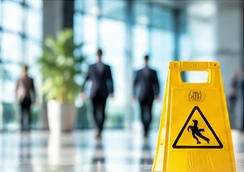
Where claims can arise
Claims may arise in shops, supermarkets, restaurants, leisure premises, car parks, communal areas and other premises open to visitors. They can involve spillages, defective flooring, unsafe steps, inadequate maintenance, falling objects, obstructions, poor lighting or other hazards. Claims involving roads and pavements can engage different statutory tests and should be assessed separately.
Occupiers’ liability and public liability
“Public liability” is commonly used as an umbrella description for accidents involving businesses, organisations or public-facing premises. The legal basis depends on the facts. An occupier’s duty to lawful visitors is principally governed by the Occupiers’ Liability Act 1957, while other duties may arise under negligence or statute. The existence of a hazard alone does not automatically establish liability: the question includes what the defendant knew or ought reasonably to have known and what precautions were reasonable.
Evidence after a fall
Report the accident promptly. If possible, photograph the exact defect or hazard before it changes, including wider shots showing location and scale. Keep footwear or damaged items where relevant, obtain witness details, retain receipts and ask that CCTV be preserved. For highway defects, measurements and photographs can be particularly important.
Procedure and funding
Eligible lower-value public liability claims valued at no more than £25,000 may proceed under the Low Value EL/PL Protocol where its conditions are met. Claims outside that protocol follow the appropriate personal injury process.
Claims accepted by Zen are ordinarily funded under a Personal Injury CFA, with the current success fee capped at 25% inclusive of VAT of the relevant damages under the agreement.